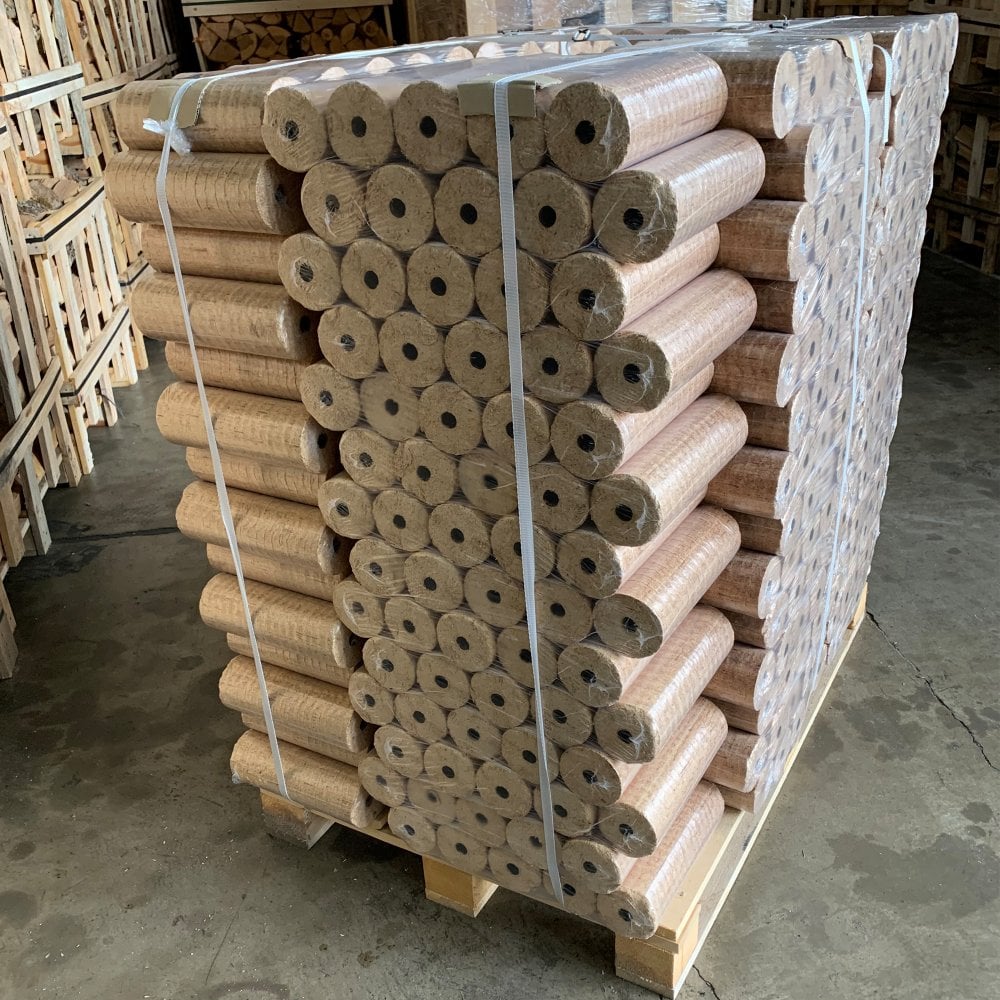
Choosing between wood pellets, briquettes and firewood usually comes down to three practical questions: how much heat you need, how much you're able to store, and how hands-on you want the process of feeding your stove to be. Here's how the three compare on the factors that actually affect day-to-day use.
Burn Time & Heat Output
Wood briquettes are the densest of the three, so a given volume burns longer and produces less ash than the same volume of split firewood. Wood pellets sit close behind on density but are designed for hoppered, auto-feeding pellet stoves rather than being loaded by hand, which changes the burn profile from a batch of heat to a steady, thermostat-controlled output over hours. Firewood, being the least dense and highest in residual moisture even when seasoned, needs reloading more often for the same heat output.
Storage & Handling
Pellets need to stay bone dry — a damp bag will swell and break apart, so they're best kept in a hopper or sealed indoor storage. Briquettes are more forgiving of humidity thanks to their compressed density but still benefit from covered, off-the-ground storage. Firewood is the most storage-tolerant of the three and the easiest to stack outdoors under cover, though it needs the most floor or yard space for an equivalent number of heating days.
Ash & Maintenance
Both pellets and briquettes are manufactured without bark, so ash output is consistently lower than firewood, which can carry more residue depending on species and how well it was seasoned. If minimising stove cleaning is a priority, pellets or briquettes will typically mean fewer ash removals across a heating season.
Cost & Convenience Trade-Off
Firewood is usually the lowest cost per unit of heat if you're happy to store, split and load it by hand. Briquettes sit in the middle — less handling than firewood, denser and cleaner-burning, at a moderate premium. Pellets cost more per kilogram but suit automated pellet stoves that need minimal daily attention, which is often the deciding factor for buyers without time to manage an open fire or wood-burning stove.
Our Recommendation
If you run a pellet stove, pellets are the only practical option and our 6mm heating pellets are pressed specifically for that use. If you have an open fireplace or wood-burning stove and want longer, cleaner burns than raw firewood, our compressed hardwood briquettes are worth testing alongside your usual stock. And if cost and simplicity matter more than burn time, our seasoned and kiln-dried firewood remains the most flexible option for most households.